

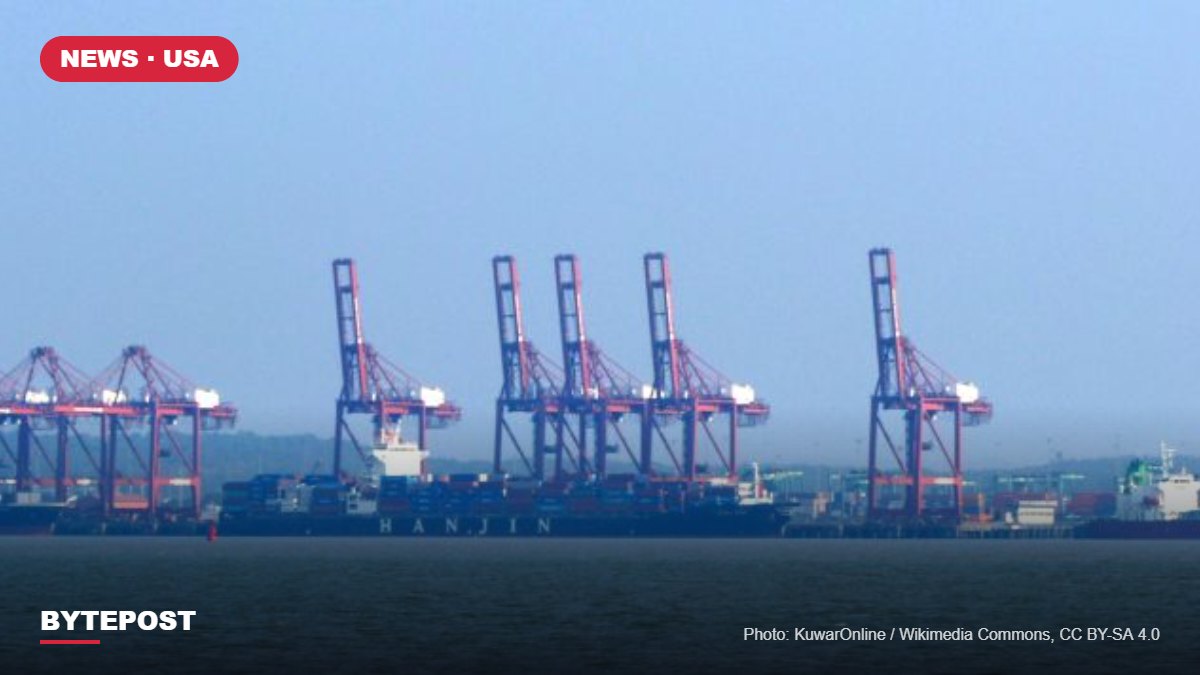
The United States has reportedly assured India that Indian goods will face lower tariffs than those of rival exporting countries once the two sides sign their long-awaited trade deal. Commerce Minister Piyush Goyal says an announcement could come “quite soon”.
Nothing has been signed yet, and the key assurance comes from an unnamed official, not from a public statement. Here is what is confirmed, what is only reported, and why it matters for jobs and prices in India.
What is new this week
On 13 November 2026, Bloomberg News reported, citing an official familiar with the negotiations who asked not to be named, that the US has told India it will get lower tariffs than its trading peers under the proposed bilateral trade agreement. Business Today and other outlets carried the report.
The same official said the first phase of the agreement will cover only goods. Services, which matter a great deal to India’s IT industry, will be taken up in later talks.
On the record, three officials have spoken in recent days:
- Piyush Goyal, Commerce Minister: said on Thursday that India had negotiated a “very good deal” and was placed to get “one of the best deals with the US”. On Friday he told Business Today TV that an announcement could come “quite soon”, with only a few issues left. “We’re having fabulous negotiations with the United States of America,” he said.
- Rajesh Agrawal, Commerce Secretary: confirmed that a US delegation visited India in early November for trade talks.
- Sergio Gor, US Ambassador to India: said last month that most major differences had been settled. “The trade agreement has been at the finish line for a very long time, and we hope we will be able to get it across the finish line,” he said.
How we got here: a short timeline
| When | What happened |
|---|---|
| Before February 2026 | Indian goods faced US tariffs of up to 50%, according to Commerce Minister Piyush Goyal |
| Early February 2026 | India and the US announced a joint statement on an interim trade framework. Goyal said the tariff on Indian exports was cut to 18% |
| 21 February 2026 | After the US Supreme Court’s ruling on tariffs, President Donald Trump said there was “no change” to the India deal, All India Radio reported |
| October 2026 | Ambassador Gor said most major differences were settled |
| Early November 2026 | A US delegation visited India for talks |
| 12–13 November 2026 | Goyal said a “very good deal” was negotiated and an announcement could come “quite soon”; Bloomberg reported the lower-than-peers assurance |
Source: News On AIR (February 2026) and Business Today (13 November 2026).
A note of caution on the 18% figure. It is what the government announced in February under the interim framework. The reports we read this week do not state the rate that will apply under the final deal, and the framework has still not been turned into a formal agreement.
What “lower than peers” means
Exporters do not compete against the tariff alone. They compete against sellers from other countries. If a shirt from India pays a lower US import duty than a shirt from a competing country, the Indian exporter can quote a better price to an American buyer.
In February, Goyal said India’s tariff was lower than those of neighbouring and competing countries, and named China, Pakistan, Bangladesh and Vietnam. This week’s reported assurance suggests the US is willing to keep that relative advantage in the final text. The latest reports do not name the peer countries or give their rates.
As we explained in our piece on who really paid for Trump’s tariffs, a large share of a tariff is usually borne by buyers in the importing country. Even so, a higher tariff makes a product costlier on the shelf and pushes orders to other suppliers. That is the risk a relative advantage protects against.
Why it is still not signed
Three reasons appear in the reports:
- US trade investigations. Business Today reports that formalising the February framework has been delayed by several US trade investigations. The reports we read do not name them.
- Russian oil. Relations have been strained by a new US measure that lets the President impose tariffs of up to 100% on major buyers of Russian oil. Those levies are currently waived, the report says.
- Farm and dairy red lines. Goyal repeated this week that India will not compromise on dairy market access or allow genetically modified products. In February he said maize, wheat, rice, sugar, soybean and poultry were kept out of tariff concessions.
There is also politics in Washington. The Democrats won control of the US House in this month’s elections, which we covered in what the midterm results mean for Indians. Tariff policy is run by the White House, but a new Congress can add scrutiny.
What India gets, going by the February framework
According to Goyal’s February briefing, reported by News On AIR:
- the tariff on Indian exports came down to 18%
- some farm products got zero US duty, including spices, tea, coffee, cashew nuts, bananas, mangoes and papaya
- sensitive farm and dairy items stayed protected on the Indian side
- the government spoke of new opportunities for MSMEs, artisans and weavers in export sectors
Whether each of these survives unchanged in the final agreement is not yet known.
What it means for you
- If you work in an export industry: a signed deal with a stable tariff gives US buyers the confidence to place longer orders, which supports jobs. India’s goods exports hit a record $49.47 billion in October 2026, according to Trading Economics, with engineering goods at $12.7 billion and gems and jewellery at $3.2 billion.
- If you run an MSME that exports: do not reprice contracts on the basis of news reports. Wait for the official notification, and ask your export promotion council or customs broker for the exact duty on your product code.
- If you work in IT or services: the first phase is about goods only. Do not expect anything on visas or services in this round.
- If you are a farmer or dairy producer: the government has again said dairy and GM products are off the table.
- If you are a consumer: a deal may lower Indian duties on some American products, but the list has not been published, so shop prices will not change overnight.
The bottom line
The mood music is the most positive it has been in months: the minister says a deal is close, the US ambassador says most gaps are closed, and a reported assurance would keep India’s tariffs below those of its competitors. But the central promise is still unofficial, the final rate is not public, and trade investigations and the Russian oil issue remain. Treat it as “close”, not “done”, until both governments publish a signed text.
This article is for information only and is not business or financial advice.
Sources
- Business Today: US assures India of lower tariffs than peers under proposed trade deal (13 November 2026)
- Briefs: US assures India of below-peer tariffs in trade deal talks (13 November 2026)
- News On AIR: India-US trade deal cuts tariff on Indian exports to 18%, says Piyush Goyal (7 February 2026)
- News On AIR: India-US trade deal remains unchanged after US Supreme Court tariff ruling (21 February 2026)
- Trading Economics: India balance of trade news (13 November 2026)




Leave a Reply