
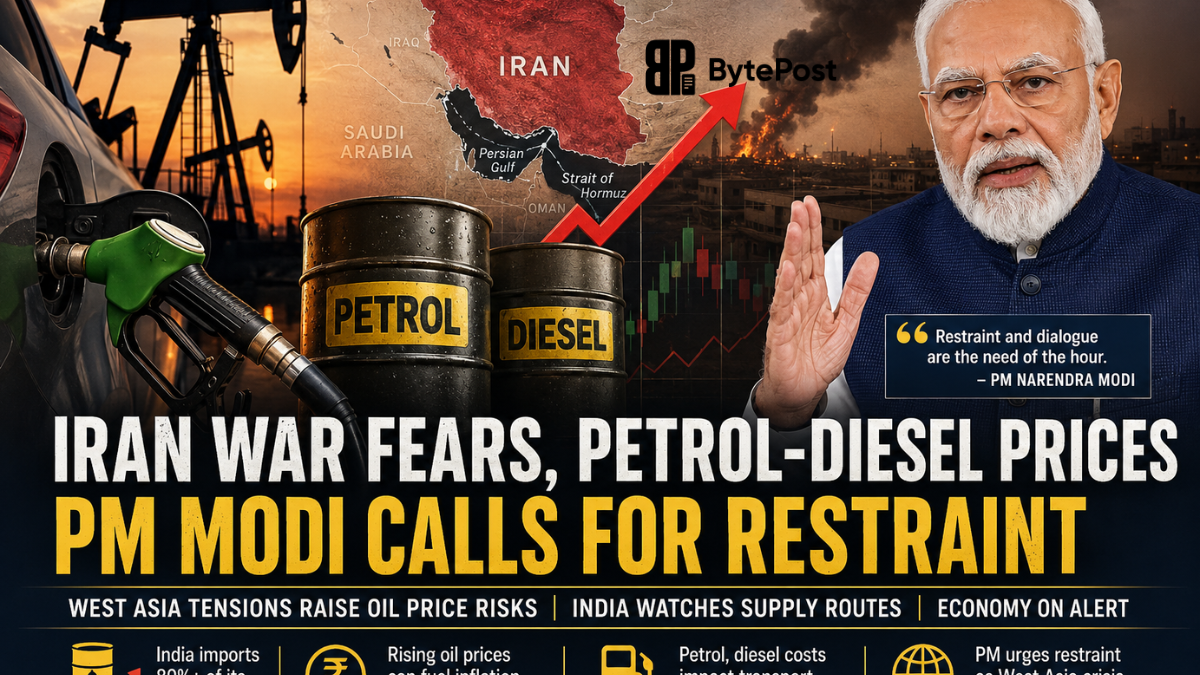
Petrol, Diesel Prices in Focus as PM Narendra Modi Pushes Restraint Amid Iran War Fears
The growing Iran conflict and rising tensions across West Asia have once again placed petrol and diesel prices under the spotlight in India. Prime Minister Narendra Modi has called for restraint and dialogue as fears of a wider regional war threaten global crude oil supply chains and raise concerns about inflation, fuel costs, and economic stability.
For millions of Indians already dealing with high living expenses, the crisis matters far beyond geopolitics. Any prolonged disruption in oil movement through West Asia could directly affect transport costs, household budgets, and the broader economy.
Context and Background
India imports more than 80% of its crude oil requirement, making the country highly vulnerable to instability in oil-producing regions. West Asia remains one of the most critical energy corridors for India, especially because major crude shipments pass through strategic maritime routes linked to the Gulf region.
The latest escalation involving Iran has renewed global anxiety over supply disruptions. Financial markets and oil traders are closely watching whether tensions could impact shipping routes such as the Strait of Hormuz, one of the world’s busiest oil transit passages.
Against this backdrop, Prime Minister Narendra Modi urged restraint and emphasized the importance of diplomatic engagement to prevent the conflict from spiraling further. His remarks reflect India’s balancing act: protecting strategic relationships in the region while safeguarding domestic economic interests.
Why the Situation Matters to India
A spike in global crude prices can quickly ripple through the Indian economy. Even if retail fuel prices don’t rise immediately, oil marketing companies face pressure when international prices remain elevated for long periods.
Here’s why the issue carries weight:
- Higher crude oil prices increase India’s import bill
- Petrol and diesel costs affect transportation and logistics
- Food inflation often rises when fuel becomes expensive
- The rupee can weaken if oil imports become costlier
- Government finances may face strain if taxes are adjusted to ease public pressure
The concern isn’t only about fuel stations. Rising diesel costs can influence everything from vegetable prices to airline fares and delivery charges.
Petrol, Diesel and Iran War: The Economic Pressure Points
Global crude markets react sharply to uncertainty in West Asia because the region controls a substantial share of the world’s oil production. Even the possibility of disruptions can trigger speculative buying and price volatility.
India has managed inflation pressures in recent years partly through calibrated fuel pricing, tax adjustments, and diversified oil sourcing. However, an extended Iran-linked conflict could test that strategy.
How Oil Markets Typically React
When geopolitical tensions rise in oil-producing regions, markets usually respond in three stages:
- Immediate price spikes driven by fear and speculation
- Shipping and insurance cost increases for oil transport
- Longer-term inflation concerns if supply disruptions continue
Analysts believe the biggest risk for India would emerge if the conflict affects maritime routes or draws multiple regional players into a prolonged confrontation.
India’s Strategic Position
India has steadily expanded its energy partnerships over the past few years, sourcing crude from multiple countries instead of relying heavily on a single region. This diversification gives New Delhi some cushion against sudden shocks.
Still, geography limits complete insulation. West Asia remains central to global oil markets, and India cannot entirely escape the impact of a sustained price surge.
The government is also likely monitoring strategic petroleum reserves and supply alternatives to manage potential volatility if the situation deteriorates further.
Impact on Common Citizens and Businesses
For ordinary Indians, the biggest concern is straightforward: will petrol and diesel prices rise again?
At present, fuel prices are influenced by a mix of global crude rates, taxes, refining costs, and currency movements. If crude remains elevated for weeks, pressure could build on domestic pricing mechanisms.
Sectors That Could Feel the Heat First
Several industries tend to react quickly when oil prices rise:
Transport and Logistics
Truck operators and transport companies often pass increased diesel costs to consumers. That can gradually push up the prices of goods across cities and rural markets.
Aviation
Airlines face higher aviation turbine fuel costs during oil spikes, which may lead to more expensive flight tickets.
Agriculture
Diesel powers irrigation pumps, tractors, and rural transport systems. Any sustained increase could affect farming expenses and food supply chains.
E-commerce and Delivery Services
Quick-commerce and delivery platforms depend heavily on fuel-driven logistics. Rising operational costs may eventually affect service pricing.
PM Narendra Modi’s Diplomatic Message Carries Economic Weight
Prime Minister Modi’s emphasis on restraint is not merely diplomatic language. It reflects India’s urgent need for regional stability in an increasingly fragile global economy.
India maintains important ties with countries across West Asia while also prioritizing energy security and trade continuity. A balanced approach allows New Delhi to protect economic interests without becoming deeply entangled in regional rivalries.
The government’s messaging also aims to reassure markets and citizens that India is closely tracking the situation.
Expert View: What Happens Next?
Energy analysts believe the next few weeks will be crucial. Much depends on whether tensions remain localized or expand into a broader regional conflict.
Several factors will determine the direction of petrol and diesel prices in India:
- Stability of oil shipping routes
- Decisions by major oil-producing countries
- Global demand trends
- Currency fluctuations
- India’s domestic tax and pricing response
Some experts argue that India is better prepared today than during earlier oil shocks because of stronger foreign reserves, diversified crude sourcing, and improved energy planning. Others warn that prolonged geopolitical instability could still trigger inflationary pressure.
Could India Avoid a Major Fuel Shock?
That depends largely on how long tensions persist. Short-term spikes are manageable, but sustained crude price increases often become harder to absorb without affecting consumers or government finances.
If the conflict escalates sharply, policymakers may face difficult choices between protecting consumers and preserving fiscal stability.
Conclusion
The Iran war fears and wider West Asia crisis have once again exposed how closely India’s economy is tied to global energy politics. Prime Minister Narendra Modi’s call for restraint highlights the seriousness of the moment, especially as concerns grow over petrol and diesel price volatility.
For now, markets remain cautious rather than panicked. But if tensions intensify, the effects could move quickly from diplomatic headlines to household budgets across India.