
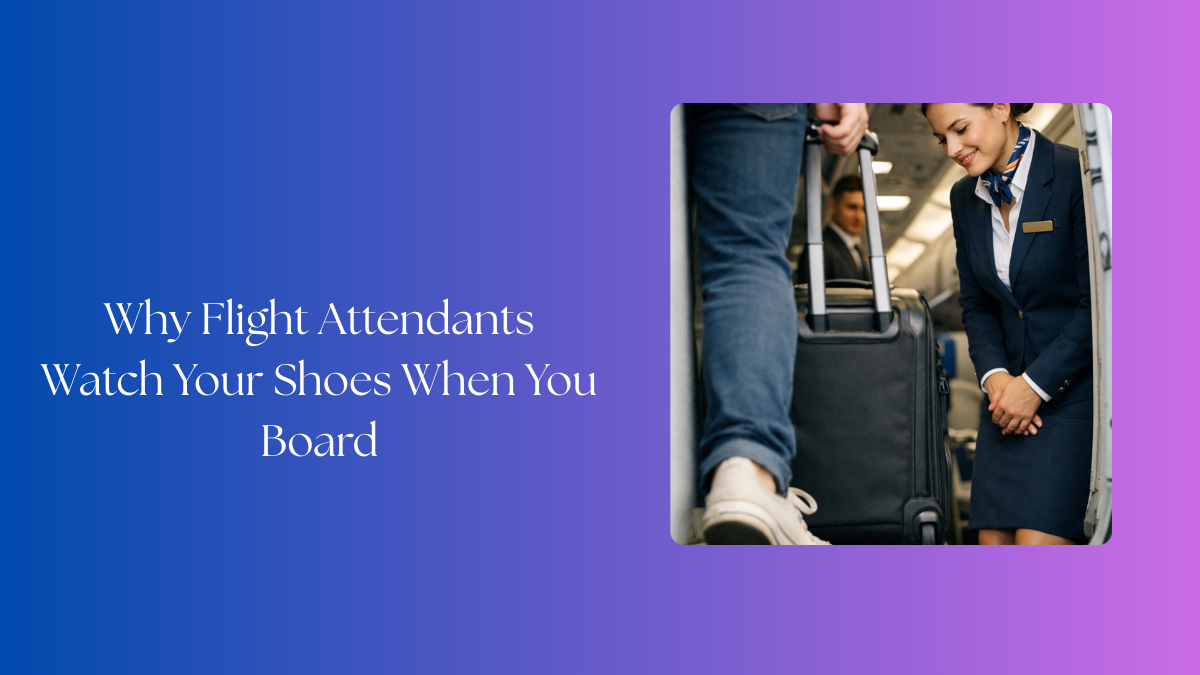
Why Flight Attendants Watch Your Shoes When You Board
When you step onto a plane and feel the flight attendant’s eyes travel downward, it might seem personal. But there’s a clear reason behind that subtle look. Crew members aren’t judging your fashion. They are conducting a quick, practical assessment that can influence safety, readiness, and even how you’ll move in an emergency. For frequent flyers, understanding what’s happening in those first seconds of boarding can change how you pack, what you wear, and how you think about in-flight safety.
Table of Contents
What’s Behind the Shoe Glance
Flight attendants greet every passenger as they board. That greeting is more than politeness. It’s the first moment for the crew to size up who’s coming on board. Shoes play a role in this rapid evaluation. Experienced attendants note footwear because it can affect mobility and safety during critical moments. They are looking for clues about how easily you could walk briskly, move through a cabin, or operate on uneven surfaces like an evacuation slide. Certain shoes — high heels, flimsy sandals, or bulky boots — can slow a person down or create hazards if a rapid exit becomes necessary.
Alongside safety, some crew members also think about hygiene and comfort. Walking barefoot through a cabin, especially toward lavatories, exposes bare feet to surfaces that are rarely cleaned thoroughly between flights. Closed, secure footwear reduces this exposure and limits the risk of slipping or injury when moving about the aircraft.
Shoes and Safety: More Than Meets the Eye
Rapid Movement in Emergencies
In an emergency, every second counts. When an alarm sounds or a situation demands a swift exit, passengers in unstable shoes can slow down themselves and others. Flight attendants are trained to watch for footwear that could impede fast movement. Stilettos, flip-flops, and loose footwear can easily cause someone to trip, slip, or struggle on an incline. They also pose risks to evacuation equipment. For instance, heels and sharp points can puncture inflatable evacuation slides, reducing their effectiveness and endangering everyone aboard.
On the other hand, supportive, flat soles and secure straps signal that someone can move with agility. Flight crews mentally note this as they plan whom they might call on to assist others if needed. Passengers perceived as steadier and more balanced may be seen as assets in a chaotic situation.
Ongoing Health and Mobility Risks
Shoes also affect comfort and health during long flights. Wearing tight, rigid footwear at high altitude can worsen circulation problems, potentially increasing risks like swelling or deep vein thrombosis. Conversely, shoes that are too loose may fall off when walking down the aisle, especially when lighting is dim or turbulence hits. By observing shoes early, attendants get a sense of whether a passenger might later need to adjust or swap shoes mid-flight.
Cabin Governance
Beyond emergencies, flight crews sometimes use footwear cues to anticipate passenger behavior. Passengers walking around barefoot or in socks may be more likely to approach crew members for blankets, help, or reassurance about unclean surfaces. While comfort is important, attire that increases demands on staff is something attendants prefer to spot early.
What Flight Attendants Notice Beyond Shoes
Shoes aren’t the only thing on the crew’s radar. As boarding begins, attendants quickly observe posture, facial expression, visible signs of distress, and how passengers carry themselves. This gives them a snapshot of each traveler’s physical condition and readiness to fly. It’s an informal check for anything that might interrupt service or require attention during the flight, such as mobility challenges, signs of illness, or intoxication.
Carry-on bags also get scrutiny. Crew members need to make sure luggage is within size limits and will fit in overhead bins properly. Large, awkward bags can slow boarding and add stress to the crew’s workflow.
So What This Means for Travelers
Dress for Practical Comfort
What you wear matters more than you might think. Frequent travelers often slip into sandals or heels for convenience or style. But in the context of air travel, closed-toed shoes with secure fastenings and flat soles perform best for safety and comfort. They allow quick movement, protect feet from cabin hazards, and signal to crew that you’re prepared for various flight scenarios.
If style is important to you, consider packing dressier shoes in your carry-on rather than wearing them during boarding and departure. Sneakers or supportive flats get you through security and initial flight phases with less stress. If you must remove shoes mid-flight, keep a spare pair of clean socks or slip-ons handy just for walking to the lavatory.
Understand the Hidden Assessment
Flight attendants don’t openly announce this assessment, and they don’t judge personalities based on footwear. Their focus is on safety and readiness. Being aware of this can change how you choose travel outfits and how you interpret those subtle glances. When a crew member looks at your shoes, they’re thinking about you and everyone else on board — not fashion.
Communicate When Necessary
If you use mobility aids, have a medical condition, or are traveling with support needs, let the crew know early. This helps them plan and assist you better. Clear communication at boarding avoids unnecessary assumptions based only on appearance or shoes.
What’s Ahead for Travellers and Flight Safety
As aviation safety evolves, crew training continues to emphasize quick passenger assessment and readiness. The recent relaxation of some airport security policies — like allowing travelers to keep shoes on during checkpoint screening in the United States — shows that regulations adapt with technology. But on board, the practical concerns remain. Shoes still influence how quickly and safely passengers can navigate an aircraft, and attendants will keep watching.
Frequent flyers who understand this dynamic can travel smarter. Selecting practical footwear, packing intelligently, and knowing what crew members pay attention to will make boarding smoother and in-flight experiences more comfortable.
In the end, those quick looks at your shoes are rooted in assurance — that if something goes wrong, everyone has the best chance of getting out safely.