

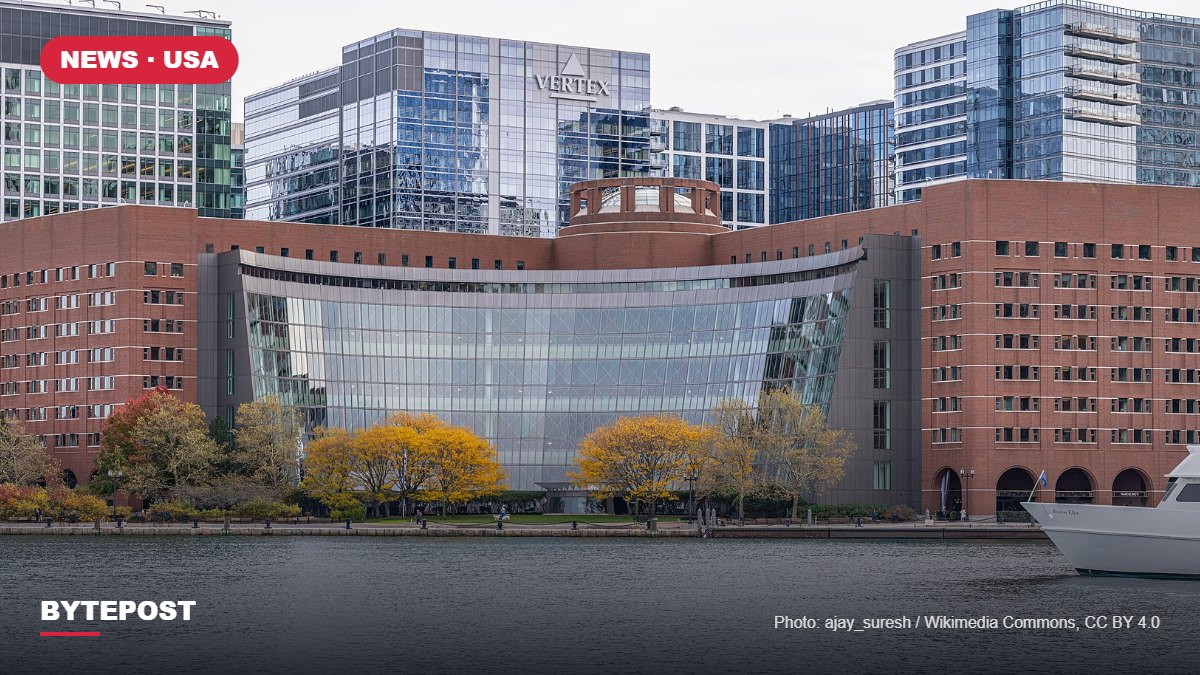
A US federal judge has thrown out the Trump administration’s rule that would have capped most international students’ stay at four years. For the more than 3.3 lakh Indian students in the US, the familiar “duration of status” system stays in place, at least for now.
Here is what the court decided, what the rule would have changed, and what Indian students and parents should do next.
What the court decided
On 16 November 2026, US District Judge F. Dennis Saylor IV of the District of Massachusetts vacated (cancelled) the Department of Homeland Security (DHS) rule in full. He found it “arbitrary and capricious” under the Administrative Procedure Act, the US law that lets courts set aside unlawful agency rules.
The judge also held that the rule’s limits on students changing programmes or degree levels went beyond what Congress had allowed. As VisaVerge reported, he wrote: “The statute simply does not grant DHS such broad and open-ended authority to undermine the F-1 visa program.”
According to Outlook India, the judge also questioned why DHS had not tried improving SEVIS, the database through which US schools already report each student’s enrolment and status, before replacing the whole system.
The case, Presidents’ Alliance on Higher Education and Immigration v. Department of Homeland Security, was brought by university groups and unions, including NAFSA, the Presidents’ Alliance, the American Federation of Teachers and the NewsGuild-CWA.
What “duration of status” means
Most F-1 students, J-1 exchange visitors and I-visa journalists are admitted to the US for “duration of status”, shown as “D/S” on the I-94 record. It means you can stay as long as you keep studying and follow the rules of your visa, with no fixed end date. Your visa stamp is different: it only lets you seek entry at the border.
The DHS rule, published on 17 July 2026, would have replaced this with a fixed end date. It was due to start on 15 September 2026, but the same judge postponed it on 14 September. So it never actually took effect.
What the rule would have changed
| Issue | Vacated DHS rule | What applies now |
|---|---|---|
| How long F-1 and J-1 students can stay | Fixed admission of up to 4 years or the programme end date, whichever came first | Duration of status: as long as you pursue your programme and keep status |
| Needing more time to finish | Apply to USCIS on Form I-539 and wait for a decision | Your school issues an updated Form I-20 (F-1) or DS-2019 (J-1) |
| Grace period after finishing (F-1) | 30 days | 60 days |
| Changing programme or degree level | No change in the first year for undergraduates; no second degree at the same or lower level | Existing transfer and change-of-level rules |
| I-visa journalists | Up to 240 days | Duration of the assignment |
Source: VisaVerge and Outlook India summaries of the rule and ruling.
Why this matters to Indians
India is the largest source of international students in the US. According to the Institute of International Education’s Open Doors 2026 report, released on 16 November and cited by Outlook India, 339,435 Indian students were in the US in 2025–26. That is 29.6% of all international students, although the number fell 6% from the year before.
Many Indian students are on long courses, especially PhDs, or move from a master’s into a PhD. Under the vacated rule, a PhD that ran beyond four years would have needed an extension request to USCIS, with the risk of delays or a refusal. That uncertainty is now gone. The 60-day grace period after graduation, which many students use to start a new programme, change status or prepare to leave, also stays.
The ruling arrives at a tense time for Indian students. VisaVerge notes that new international enrolment fell 15% this autumn, based on IIE data. BytePost earlier looked at the fall in Indian student numbers in the US.
Is this final? What happens next
Not necessarily. The government can appeal to the US Court of Appeals for the First Circuit and ask for a stay. VisaVerge reports that the government had already appealed the September postponement, but that appeal was put on hold on 13 November. DHS had not said publicly whether it would appeal the new ruling at the time of writing.
Two points are worth knowing:
- An appeal alone does not bring the rule back. Only a stay from a court would let DHS enforce it again.
- DHS could also write a new rule, but that would need a fresh proposal and public comment period, which usually takes months. The judge’s finding that the programme-change limits break the F-1 law would also limit what a new rule could say.
What it means for you: what to do now
- Do not file Form I-539 for a programme extension. That step belonged to the cancelled rule. If you need more time, ask your Designated School Official (DSO) for an updated I-20 before your current end date.
- Check your I-94. Download it from the US CBP I-94 website and make sure it shows “D/S”. If it shows a fixed date by mistake, speak to your DSO.
- Keep your status clean. D/S only lasts while you maintain status: full-time enrolment, only authorised work, and updating your address and programme details on time.
- Planning a PhD or second master’s? Normal transfer and change-of-level rules apply. Confirm the steps with your international student office.
- Students heading to the US in 2027: Nothing changes in how you apply for your F-1 visa. Watch for news of an appeal or stay over the next few weeks.
- Ignore old advice. Some agents and blogs prepared guidance for the rule in mid-2026. Anything telling you to apply to USCIS for more time is out of date.
This article is for information only and is not legal advice. For your own case, speak to your university’s international office or a qualified US immigration lawyer.
The bottom line
The four-year cap on student stays is gone, and it never took effect in the first place. Indian students in the US keep duration of status, school-issued extensions and the 60-day grace period. The government may still appeal, so keep your SEVIS record clean, rely on your DSO rather than old online advice, and watch for any stay order. For other visa changes that could affect you after graduation, see our explainer on the proposed end of the H-1B 60-day grace period.
Sources
- VisaVerge: Judge strikes down DHS rule that would have capped F-1 and J-1 student stays at four years, 16 November 2026
- Outlook India: Trump’s US visa rule for foreign students, journalists struck down by court, 17 November 2026
- Newsweek: Judge strikes down Trump’s new visa limit on foreign students, 16 November 2026

Leave a Reply