

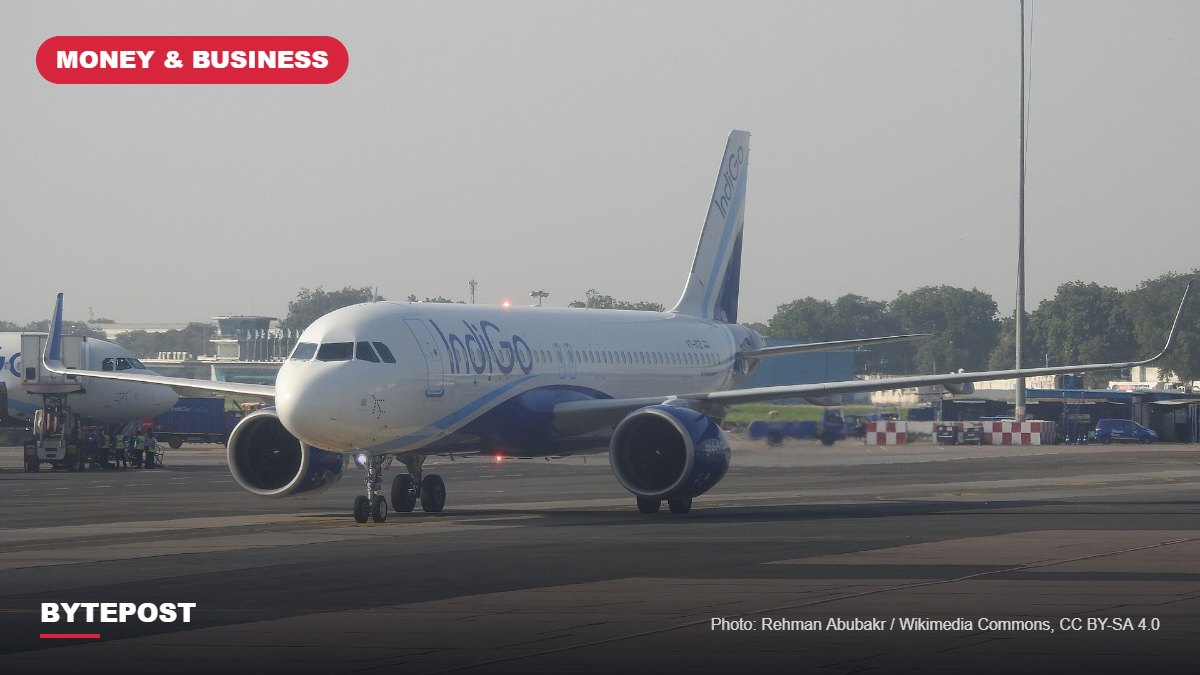
IndiGo is India’s largest airline, its fares went up sharply this year, and its revenue grew 26% in the July–September quarter. So why did India’s biggest airline still lose ₹1,879 crore in those three months?
The answer is mostly one word: fuel. Here is how an airline’s money works, using IndiGo’s own Q2 FY27 numbers, and what it means for the price of your next ticket.
The answer in brief
- Fuel costs jumped 67% in a year and now eat up about 43 rupees of every 100 rupees IndiGo earns from operations.
- Fares rose a lot (yield up 34%), but fewer people flew: passengers fell 4.7%.
- A weak rupee also hurts. Airlines pay for many costs, such as aircraft leases, in foreign currency; IndiGo’s currency losses added ₹1,370 crore to costs in the quarter (standalone).
- The loss narrowed from ₹2,582 crore a year ago, mainly because the currency loss was smaller. Without currency effects, IndiGo went from a small profit to a loss.
IndiGo’s quarter in numbers
InterGlobe Aviation, IndiGo’s parent company, reported results for the quarter ended 30 September 2026 (Q2 of financial year 2026-27) on 29 October. These are consolidated figures, as reported by Moneycontrol and Business Upturn:
| Measure | Q2 FY26 (Jul–Sep 2025) | Q2 FY27 (Jul–Sep 2026) | Change |
|---|---|---|---|
| Revenue from operations | ₹18,555 crore | ₹23,364 crore | +25.9% |
| Total expenses | ₹22,081 crore | ₹26,188 crore | +18.6% |
| Fuel expenses | ₹5,962 crore | ₹9,967 crore | +67.2% |
| Net loss | ₹2,582 crore | ₹1,879 crore | Narrowed 27.2% |
| Net result excluding forex | Profit ₹103.9 crore | Loss ₹723.7 crore | Swung to loss |
| Passengers carried | — | 27.5 million | −4.7% |
| Load factor (seats filled) | 82.5% | 80.3% | −2.2 points |
| Yield (revenue per passenger-km) | — | ₹6.30 | +34.3% |
Source: Moneycontrol (via TradingView) and Business Upturn reports on IndiGo’s Q2 FY27 results. The fuel expense figures are from the standalone statement reported by Business Upturn.
How an airline makes money
An airline’s business is simple to describe and hard to run. It earns mainly by selling seats, plus extras such as seat selection, excess baggage, food and cargo. It spends on fuel, aircraft (leases, depreciation and interest), staff, maintenance, and airport and navigation charges. Margins are thin, so a small change in fuel price or exchange rate can turn a profit into a loss.
Airlines measure this in two key numbers:
- CASK (cost per available seat-kilometre): what it costs to fly one seat for one kilometre. IndiGo’s CASK rose 20.6% to ₹6.22.
- Yield: what the airline earns for each kilometre a paying passenger flies. IndiGo’s yield rose 34.3% to ₹6.30.
The yield is per passenger actually flown, while CASK is per seat offered, including empty ones. With about 80% of seats filled, revenue per seat is lower than the yield, so the gap between the two numbers is not as comfortable as it looks.
Where the money went
Business Upturn’s report on IndiGo’s standalone results breaks down the main costs for the quarter:
| Cost item (standalone, Q2 FY27) | ₹ crore | Change vs year ago |
|---|---|---|
| Aircraft fuel | 9,966.8 | +67.2% |
| Supplementary rentals and maintenance | 3,631.4 | +11.1% |
| Depreciation | 3,042.5 | +15.7% |
| Other expenses | 2,341.1 | +11.4% |
| Employee costs | 2,031.3 | +11.4% |
| Finance costs | 1,742.1 | +18.1% |
| Airport fees and charges | 1,658.2 | +9.4% |
| Foreign exchange loss | 1,370.0 | −52.8% |
Fuel is the giant. According to Business Upturn, fuel was 42.7% of revenue in the quarter, up from 32.1% a year earlier. Moneycontrol reports that fuel cost per seat-kilometre rose 68.9% to ₹2.44. Excluding fuel and currency effects, CASK still rose 14.6% to ₹3.45, so other costs are climbing too, just more slowly.
This fits the wider picture in India’s economy. Wholesale prices of mineral oils were up about 46% year on year in October, as we explained in our report on wholesale inflation hitting 12.29%.
CEO Willie Walsh said in the results statement, as quoted by Moneycontrol: “The seasonally soft September quarter saw exceptionally elevated fuel costs and continued geopolitical turmoil.”
The economics of one passenger (estimated)
To make the numbers easier to picture, we divided IndiGo’s quarterly figures by the 27.5 million passengers it carried. These are rough averages we have calculated, not figures reported by IndiGo. Revenue also includes cargo and other income, so treat them as indicative only.
| Per passenger (estimated average, Q2 FY27) | Amount | How we worked it out |
|---|---|---|
| Revenue from operations | about ₹8,500 | ₹23,364 crore ÷ 27.5 million |
| Total expenses | about ₹9,520 | ₹26,188 crore ÷ 27.5 million |
| Of which, fuel | about ₹3,620 | ₹9,967 crore ÷ 27.5 million |
| Net loss | about ₹680 | ₹1,879 crore ÷ 27.5 million |
| Net loss excluding forex | about ₹260 | ₹723.7 crore ÷ 27.5 million |
In other words, on an average trip in the quarter, fuel alone cost IndiGo roughly ₹3,600, and the airline lost a few hundred rupees per passenger even after currency effects are set aside.
Why didn’t higher fares fix it?
Fares did go up: yield rose 34.3%. But two things worked against IndiGo:
- Fewer flyers. Passengers fell 4.7% and load factor dropped from 82.5% to 80.3%. Higher fares and a weak travel season (July–September is usually the slowest quarter) meant more empty seats.
- Costs rose faster at the margin. Fuel costs rose by about ₹4,000 crore in a year, eating up most of the ₹4,800 crore rise in revenue.
An airline also cannot simply cut flights to save fuel, because aircraft lease rentals, staff and interest still have to be paid. That is why airlines try to keep planes full even at lower fares.
Is IndiGo in trouble?
Not in the short term, based on the reported figures. Moneycontrol reports total cash of ₹52,685 crore, including ₹39,999 crore of free cash. Total debt was ₹87,303 crore, but ₹55,159 crore of that is capitalised lease liabilities for aircraft, an accounting entry for future lease payments rather than bank loans. A large cash pile gives IndiGo time, but continued losses would eat into it.
What it means for you
- Expect fares to stay high while fuel stays costly. Airlines pass on fuel costs through higher fares whenever demand allows.
- Book early for peak dates. The winter wedding and holiday season is usually busier than the September quarter. Booking well ahead usually costs less than buying at the last minute.
- Watch the add-ons. When base fares are under pressure, extras like seat selection and baggage become more important to airlines. Compare the total price, not just the headline fare.
- Know the new fare rules. From 1 January 2027, the government gains powers to step in on fares in some situations. Read our explainer on the new airfare rules.
What to watch next
Three things will decide whether IndiGo’s losses keep shrinking: the price of jet fuel, which oil companies revise regularly in line with global crude prices; the rupee’s value against the dollar, which drives currency losses; and whether passenger numbers recover as the busier winter season begins. IndiGo’s next quarterly results, for October–December, will show how these played out.
The bottom line
IndiGo is earning far more per passenger than a year ago, but fuel costs rose even faster, fewer people flew, and the weak rupee added to the bill. Its loss shrank mainly because currency losses were smaller, not because the core business improved. For flyers, that means fares are unlikely to fall much until fuel prices ease.
This article is for information only. It is not investment advice or a recommendation to buy or sell any security.




Leave a Reply