

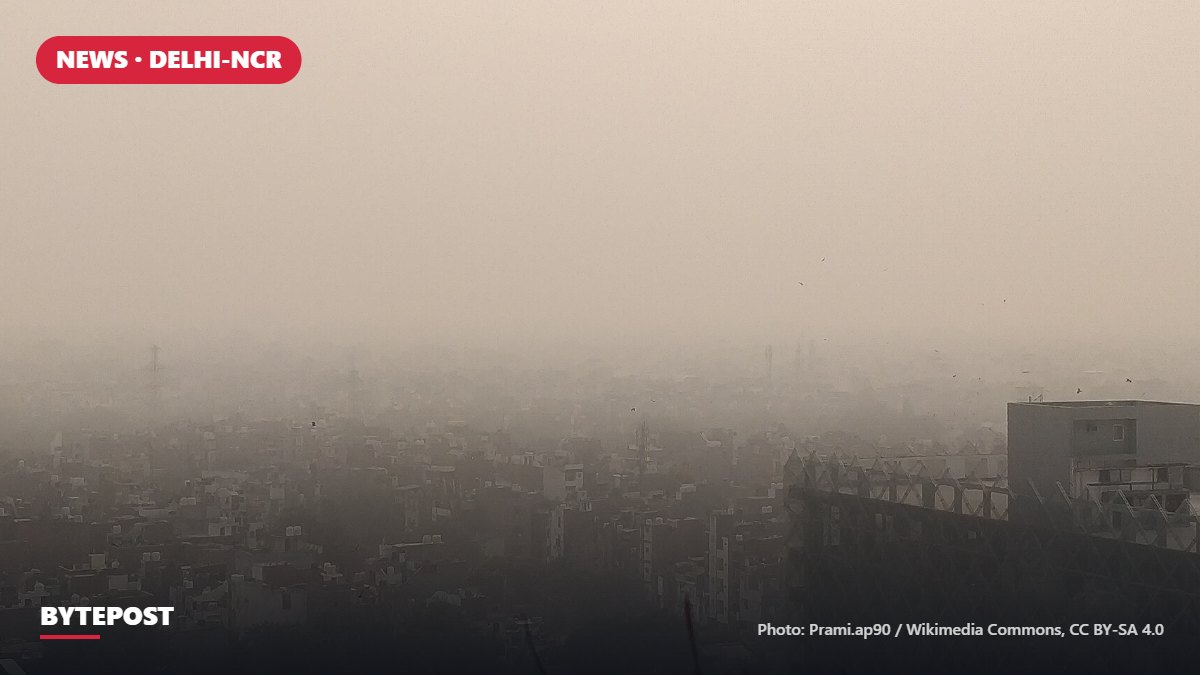
Delhi-NCR’s strictest round of anti-pollution curbs this season is over for now. But if you were planning to restart a building project or send everyone back to office full-time, read the fine print first, because two important restrictions have not gone away.
What happened
On 17 November 2026, the GRAP sub-committee of the Commission for Air Quality Management (CAQM) revoked Stage III of the Graded Response Action Plan (GRAP) across the National Capital Region, with immediate effect. GRAP is the emergency playbook that tightens rules in steps as Delhi’s air gets worse.
According to the official release, Delhi’s Air Quality Index (AQI) had improved to 204 on 17 November. That is at the very bottom of the “Poor” band. Stage III had been in force since an order dated 6 November, when, as media reports noted, Delhi’s daily average AQI had touched 382.
The commission also said the India Meteorological Department (IMD) and IITM forecast the AQI to stay in the “Poor” to “Very Poor” range in the coming days. In other words, the air is better, not clean.
What changes now that Stage III is gone
Stage III adds a layer of extra restrictions on top of Stages I and II. With that layer removed, reports listing the Stage III measures point to these main changes:
- Older cars: the Stage III ban on BS-III petrol and BS-IV diesel light motor vehicles no longer applies on the basis of Stage III.
- Schools: the Stage III requirement for hybrid (online plus offline) classes for some grades can be relaxed. Schools and local authorities will issue their own instructions, so check your school’s circular.
- Other Stage III curbs: extra restrictions that applied only because Stage III was in force, such as certain dust-generating activities, fall away.
What has NOT changed
This is the part many people will miss. The CAQM release says a separate commission order dated 30 October 2026 stays in force. That order does two things:
| Rule | Status after 17 November | Who it affects |
|---|---|---|
| Ban on dust-generating demolition and outdoor construction across the whole NCR (exempted projects aside) | Still in force under the 30 October order | Builders, home renovators, contractors, construction workers |
| State government and private offices to run with up to 50% of staff attending physically | Still in force for 5–20 November in Delhi and nearby districts | Office-goers and employers |
| GRAP Stage I and Stage II measures | Still in force, and agencies told to intensify them | Everyone in Delhi-NCR |
| Stage III-only curbs (older BS-III petrol / BS-IV diesel cars, hybrid school classes) | Lifted | Car owners, students and parents |
So, some reports suggest construction can now resume. Going by the commission’s own release, outdoor construction and demolition that generates dust remains restricted under the 30 October order unless a project is exempted. If you are a homeowner with work pending, confirm with your contractor and local body before restarting.
How GRAP stages line up with AQI
GRAP is tied to Delhi’s AQI bands. A simple way to remember it:
| AQI band | Category | GRAP stage |
|---|---|---|
| 201–300 | Poor | Stage I |
| 301–400 | Very Poor | Stage II |
| Above 400 | Severe | Stage III and above |
The commission does not wait for the exact number to be crossed. It can invoke a stage in advance if forecasts show the air getting worse, which is what happened on 6 November, and it can bring Stage III back just as quickly if the AQI climbs again.
What it means for you: what to do now
- Check the stage before you plan. The CAQM says you can check the AQI on the SAMEER app and the current GRAP stage on the CAQM website (caqm.nic.in). Stages can change within a day.
- Office-goers: the 50% physical attendance rule runs until 20 November. Expect your employer to follow it until then and confirm what happens from 21 November.
- Car owners: keep your Pollution Under Control (PUC) certificate up to date. Stage I and II enforcement on visibly polluting and end-of-life vehicles continues.
- Home renovation: do not restart dusty outdoor work just because Stage III is gone. The 30 October order still applies.
- Parents: follow your school’s latest circular on physical classes.
- Health: an AQI of 200-plus is still “Poor”. Children, older people and anyone with asthma or heart conditions should limit long outdoor exertion, especially early morning and late evening.
If you are heading to the trade fair at Bharat Mandapam this week, our IITF 2026 guide has timings and the best ways to reach by Metro, which also helps keep car trips down.
Small steps the commission is asking citizens to take
Along with the order, CAQM repeated its “citizen charter” for Stages I and II. The most practical points:
- Do not idle your engine; switch it off at red lights.
- Keep tyres properly inflated and engines tuned, and replace air filters on time.
- Use public transport or car-pool where you can.
- Do not burn garbage, leaves or biomass in the open, and avoid outdoor smoke-generating cooking.
- Avoid running diesel generator sets except for essential use.
- Report polluting activity through the 311 App, Green Delhi App or SAMEER app.
- Work from home if your job allows it.
The bottom line
Stage III is off because the AQI dipped to 204, and the most visible rules, like curbs on older cars and hybrid school classes, are easing. But the NCR-wide construction restriction and the 50% office attendance rule remain under a separate 30 October order, and Stage I and II curbs stay. The air is forecast to stay poor to very poor, so check the CAQM website before you plan, and expect the rules to tighten again quickly if pollution rises.



Leave a Reply